
GHK-Cu vs AHK-Cu: Comparing Copper Peptides for Research
Introduction
GHK-Cu and AHK-Cu are two copper-binding tripeptides that show up frequently in the peptide research literature, and researchers comparing sourcing options often want to understand how the two relate before selecting a compound for a protocol. This comparison focuses strictly on what distinguishes the two compounds structurally and how to verify purity and identity for each, not on research outcomes or applications.
What GHK-Cu Is, Per the Research Literature
GHK-Cu is a tripeptide composed of glycine, histidine, and lysine, complexed with a copper (II) ion. It is one of the more extensively documented copper peptide complexes in the scientific literature, with a long publication history in dermatological and cellular research contexts. Structurally, its high affinity for copper is attributed to the specific amino acid sequence and the resulting binding geometry. You can view full specifications and available concentrations on the GHK-Cu product page.
What AHK-Cu Is, Per the Research Literature
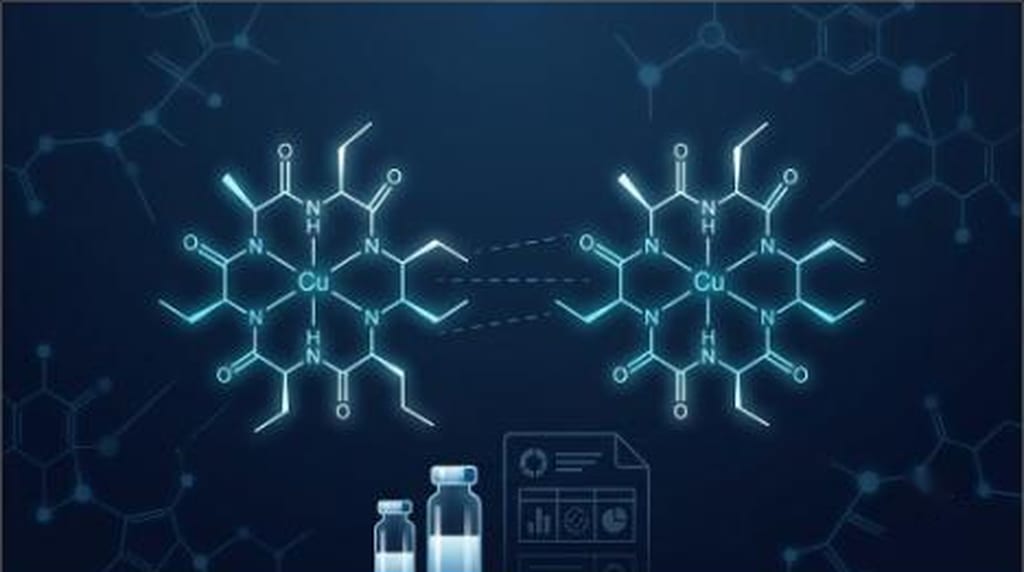
AHK-Cu is a related copper-binding tripeptide in which alanine replaces the glycine found in GHK-Cu, paired with histidine and lysine and complexed with copper. Researchers studying structure-activity relationships in copper peptide chemistry often examine AHK-Cu alongside GHK-Cu as a structural analog, since the single amino acid substitution changes binding characteristics and physicochemical properties while preserving the overall tripeptide-copper complex format. Full specifications are available on the AHK-Cu product page.
The Core Structural Difference
The distinction between the two compounds comes down to one substituted residue: glycine in GHK-Cu versus alanine in AHK-Cu. This is a composition and molecular weight difference, not a claim about which compound performs better for any particular research application. Anyone comparing the two for a research protocol should treat this as a starting point for their own literature review, not as guidance on suitability.
Why Purity and Identity Verification Matter for Both
Because GHK-Cu and AHK-Cu are structurally similar, analytical verification is what separates a properly characterized batch from an ambiguous one. Two checks matter most when evaluating either compound:
- Purity by HPLC. High performance liquid chromatography quantifies the percentage of the target peptide relative to any synthesis byproducts or degradation products in the batch.
- Identity confirmation by mass spectrometry. Mass spec confirms the molecule present actually matches the expected molecular weight for GHK-Cu or AHK-Cu, rather than assuming identity from the label alone.
Because the two compounds differ by only one amino acid residue, precise molecular weight confirmation is particularly relevant here: it is the analytical method that distinguishes one compound from the other with certainty.
What a Real Certificate of Analysis Should Include
A Certificate of Analysis (COA) for either compound should specify, at minimum: the batch or lot number, HPLC purity percentage, mass spectrometry identity confirmation with observed versus expected molecular weight, the testing laboratory's name, and the date of analysis. A COA without a named third-party lab or without both purity and identity data provides limited assurance and is worth treating with caution.
Nordiscience's Sourcing Standards
Nordiscience sources GHK-Cu, AHK-Cu, and every compound in its catalog under manufacturing protocols aligned with GMP-adjacent practices, with each batch verified through independent third-party laboratory testing. A Certificate of Analysis is available on request for any batch, covering both the purity and identity checks outlined above.
Ordering From Nordiscience
Beyond the compound specifications, a few practical details differentiate ordering from Nordiscience: checkout supports credit card, Apple Pay, and Google Pay, shipping is fast and ships from the US, and the support team is reachable by email or WhatsApp for any sourcing or documentation questions.
- Email: info@nordiscience.com (Monday through Friday, 9 AM to 5 PM Mountain Time)
- WhatsApp available on site
Research Use Only
For Research Use Only. Not for human consumption. Not for veterinary use. Not for diagnostic use. Products sold by Nordiscience are intended for laboratory research and identification purposes only and have not been evaluated by the FDA.