
How to Read a Certificate of Analysis: A Researcher's Checklist
Why COA Literacy Matters
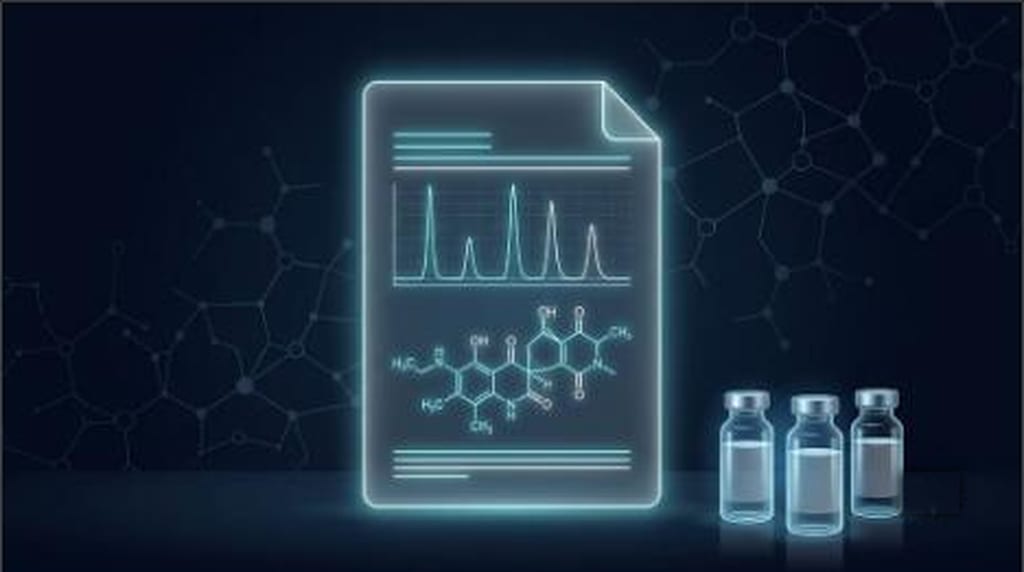
Most peptide suppliers will hand you a Certificate of Analysis (COA) if you ask for one. Fewer of them will hand you a COA that actually tells you anything. For a researcher evaluating a source, the ability to read a COA closely matters as much as requesting one in the first place. A poorly documented COA can look reassuring at a glance while leaving the two questions that matter most unanswered: is this the compound it claims to be, and how pure is it.
This checklist covers what a COA needs to include, what each section actually verifies, and the signs that a document is incomplete or not tied to the batch in your hand.
What a Certificate of Analysis Actually Verifies
A COA exists to connect a specific batch of material to a specific set of laboratory test results. It is not a marketing document, and it is not the same thing as a supplier stating a purity percentage on a product page. A COA worth relying on answers two separate questions.
Identity confirmation: is the material structurally the compound it is labeled as, typically established through mass spectrometry (MS).
Purity quantification: what percentage of the sample is the target compound, typically established through high performance liquid chromatography (HPLC).
Both pieces of information need to come from laboratory testing tied to the batch received, not from a general specification sheet that could apply to any batch a supplier has ever sold.
The Checklist
When reviewing a COA, confirm it includes each of the following.
Batch or lot number. This number should match the number printed on the product packaging or listed at checkout. If a COA has no batch number, or a generic one, it cannot be tied to the material actually received.
Third-party testing. Testing performed by an independent laboratory carries more weight than testing performed by the supplier itself. Look for the testing laboratory's name printed on the document.
HPLC purity data. The COA should show an actual purity percentage backed by chromatographic data, not a rounded number with no supporting method behind it.
Mass spectrometry identity confirmation. This is the data that confirms the compound's molecular identity rather than simply assuming the label is correct.
Test date. A COA without a date offers no way to know how recently the batch was tested, or whether it reflects the material currently being shipped.
Testing method and reference standard. The strongest COAs note which analytical method was used and what reference standard the sample was measured against.
Red Flags to Watch For
A few patterns are worth treating as warning signs rather than minor omissions.
A COA that is undated, unsigned, or has no laboratory name attached.
A COA that lists a purity percentage with no chromatogram or supporting data behind it.
A COA that appears identical across multiple, unrelated batch numbers.
A COA that cannot be matched to the batch number on the product received.
A supplier that cannot produce a COA on request, or delays indefinitely when asked.
None of these guarantee a compound is mislabeled or substandard, but each one removes a layer of verification a researcher would otherwise have.
How Nordiscience's COAs Are Structured
Every batch sold on Nordiscience is independently tested by a third-party laboratory, and a Certificate of Analysis is available on request that includes the batch number, HPLC purity data, and mass spectrometry identity confirmation, dated to the testing period for that batch. Sourcing follows GMP-following manufacturing protocols, and documentation is provided so researchers can verify what they are receiving before it reaches the bench, not after.
See this documentation in practice on the GHK-Cu and AHK-Cu sourcing guides, or browse the full catalog on the shop page.
Requesting a COA
Request a Certificate of Analysis for any current batch, or ask a documentation question, at info@nordiscience.com or via WhatsApp (Monday through Friday, 9 AM to 5 PM Mountain Time).
For Research Use Only. Not for human consumption. Not for veterinary use. Not for diagnostic use. All products listed on this site are intended for laboratory research and identification purposes only. Products have not been evaluated by the FDA.