
← All posts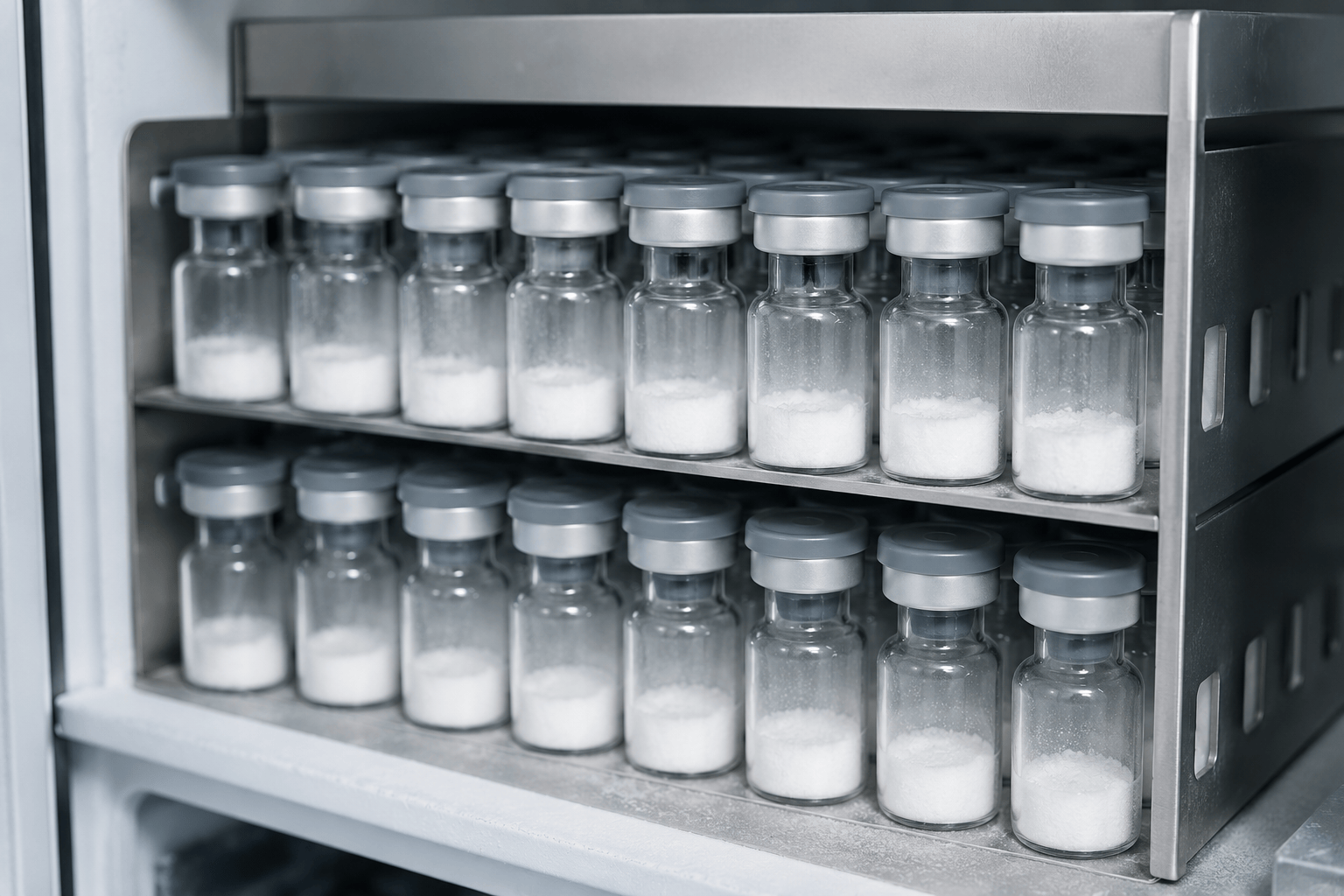
How to Store Research Peptides: Temperature, Shelf Life & Handling
Nordiscience Team · June 22, 2026 · 1 min read
Introduction
Proper storage is one of the most overlooked factors in peptide research. Even a high-purity peptide can degrade quickly if it's exposed to the wrong temperature, repeated freeze-thaw cycles, or moisture. This guide covers the essentials of keeping your research peptides stable.
Note: This content is for laboratory research purposes only and is not intended for human or veterinary use.
Why Storage Matters
Peptides are sensitive to several environmental factors:
- Temperature — heat accelerates degradation.
- Moisture — promotes hydrolysis and bacterial growth.
- Light — certain sequences are photosensitive.
- Oxidation — affects peptides containing cysteine, methionine, or tryptophan.
Recommended Storage Conditions
Lyophilized (powder) form
- Short term (weeks):
2–8°Crefrigerated. - Long term (months to years):
-20°Cor-80°C, sealed and desiccated.
Reconstituted (in solution)
- Use within a few days when kept at
2–8°C. - For longer storage, aliquot and freeze to avoid repeated freeze-thaw cycles.
Best Practices
- Aliquot before freezing to minimize freeze-thaw damage.
- Keep peptides away from direct light.
- Allow vials to reach room temperature before opening to prevent condensation.
- Use sterile, bacteriostatic solvents for reconstitution.
Shelf Life Overview
| Form | Temperature | Approx. Stability |
|---|---|---|
| Lyophilized | -20°C / -80°C | 12–24+ months |
| Lyophilized | 2–8°C | Several weeks |
| In solution | 2–8°C | 2–7 days |
Conclusion
Consistent, cold, and dry storage is the single best way to preserve peptide integrity. When in doubt, keep it lyophilized and frozen until use. For more lab resources, visit Nordiscience.